How Multi Camera Systems Work in Reality TV Production
Quick answer
Multi camera reality TV systems are not just about adding more cameras. Every extra camera increases routing, monitoring, control, recording, data handling and fault management complexity. A strong reality workflow therefore depends on engineered camera systems that keep pictures, control and recording stable across the full production, especially when shows involve remote positions, long cable runs, PTZ cameras, wireless links or constant capture across multiple story areas.
For producers, the practical point is simple: a camera list is not the same as a camera workflow. The real value comes from designing a system that lets directors, engineers, camera teams and data teams work reliably under pressure. That is why multi camera design is one of the clearest places where engineered workflow matters more than standard equipment rental.
Why multi camera reality systems are different
When producers think about camera systems on a reality show, the first question is usually how many cameras are needed. That is understandable, but the more important question is how those cameras will function together once production starts. On reality television, cameras often run across multiple locations, follow unpredictable action, and need to stay ready for story moments that cannot be repeated.
That is what makes reality television technically demanding. Unlike a short scripted setup where a few cameras may be reset between takes, a reality format often needs continuous readiness, fast response and dependable recording across the full system. The challenge is not simply camera quantity. It is the engineering required to make the entire camera ecosystem stable and usable.
At Visual Impact, the engineering task is therefore not just to supply enough cameras. It is to build a workflow that supports acquisition, routing, monitoring, control, recording and media handling as one integrated system.

Camera count changes everything
The jump from a small production to a large multi camera reality format is not linear. Every additional camera increases the number of feeds that must be managed, the amount of media that must be recorded, the number of positions that need power and signal transport, and the level of coordination required between camera, engineering and production teams.
A larger camera count affects almost every department. Directors may need more live sources to monitor. Engineering teams may need more routing capacity, more control points and more redundancy. Data teams may need larger storage and faster transfer systems. Camera teams may need clearer operating plans so that roaming, fixed and specialty cameras do not duplicate coverage or leave story gaps.

The main parts of a multi camera workflow
1. Acquisition
A well engineered reality system starts with acquisition. This includes deciding which cameras will be fixed, which will roam, whether PTZ cameras are needed, and how operators or assistants will support each position. The right mix depends on the format, the site, the distances involved and how much editorial coverage must be maintained at the same time.
2. Transport
Once cameras are deployed, their signals need to reach the right destinations reliably. This can involve copper runs over shorter distances, fibre for longer runs, wireless links where mobility is essential, and network based systems where control and data need to move efficiently between locations.
3. Monitoring and control
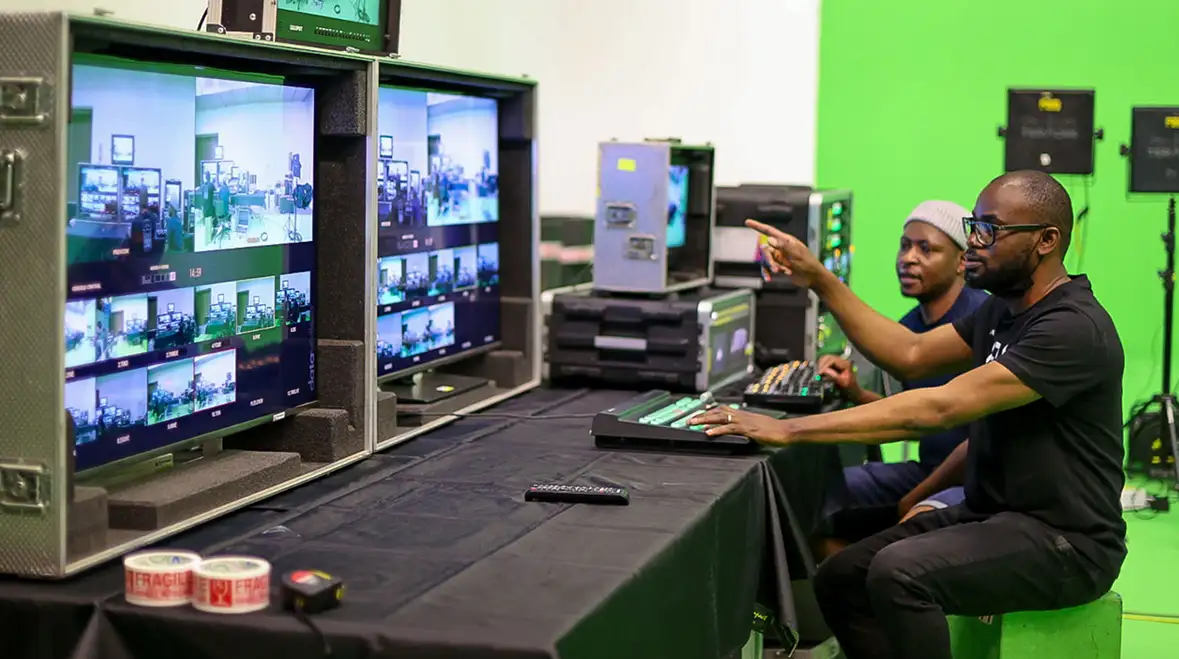
Monitoring and control then become central. Producers and directors need fast visibility of multiple camera feeds, while engineers need confidence that picture, control and recording remain operational. On larger productions, this is where the difference between a simple kit list and a designed workflow becomes obvious.
4. Recording and data handling
Recording is only one layer of the system. The footage also needs to be protected, transferred, tracked and handed over in a controlled way. When multiple cameras are capturing high volumes of media over long shooting days, data handling becomes part of the core camera workflow rather than a separate afterthought.
Why control room design matters
Many producers understandably focus on cameras in the field, but the control environment is just as important. A reality production succeeds when directors, technical teams and producers can see the right sources at the right moment and react quickly. If monitoring is confusing, if signal flow is unclear, or if fault resolution is slow, story capture suffers even when the cameras themselves are good.
This is where standard rental thinking often falls short. A generic list of cameras and accessories does not answer the real production questions. The workflow still needs to be designed around how feeds are viewed, how signals are routed, how operators are supported and how the technical team will keep the system stable once the shoot is under pressure.

Why engineering depth reduces risk
On reality productions, downtime is not just inconvenient. It can damage story capture, delay schedules and reduce editorial options. That is why multi camera systems have to be planned and tested properly before filming begins. Site conditions, distances, power availability, control room layout, wireless range and media volume all shape the final design.
When that work is done properly, producers get more than camera coverage. They get a multi camera workflow that is structured to stay reliable, flexible and efficient throughout the shoot. That is one of the clearest differences between simply renting equipment and engineering a reality production system.

Conclusion
A multi camera reality system is really a live production workflow with many moving parts. Cameras are only the visible layer. Underneath them sit transport, routing, monitoring, recording, control and data systems that all need to function together. For that reason, the strongest reality productions are not built around a camera count alone. They are built around an engineered workflow that turns those cameras into a dependable production system.

Frequently Asked Questions
How many cameras does a reality show usually need?
It depends on the format, the number of simultaneous story areas, whether coverage must be continuous and how much control room visibility is required. The right answer is about workflow, not only camera count.
What is the difference between a camera package and a multi camera workflow?
A camera package is a list of equipment. A multi camera workflow is the full system that allows those cameras to be deployed, routed, monitored, recorded and supported reliably during production.
Why does camera count increase risk so quickly?
Each additional camera adds signal paths, power needs, monitoring demands, recording load and media volume. That means the system becomes more complex operationally, not just larger numerically.
Why are PTZ and remote cameras useful on reality shows?
They help productions maintain coverage in positions where traditional operators may be impractical, especially over long distances or in spaces where discretion and flexibility matter.
Contact
Email: reality@visuals.tv · Web: visuals.tv
Call: Cape Town 021 468 6000 · Joburg 011 788 9879